How to Prepare for a Theatre Interview: Questions Actors and Directors Should Ask Back
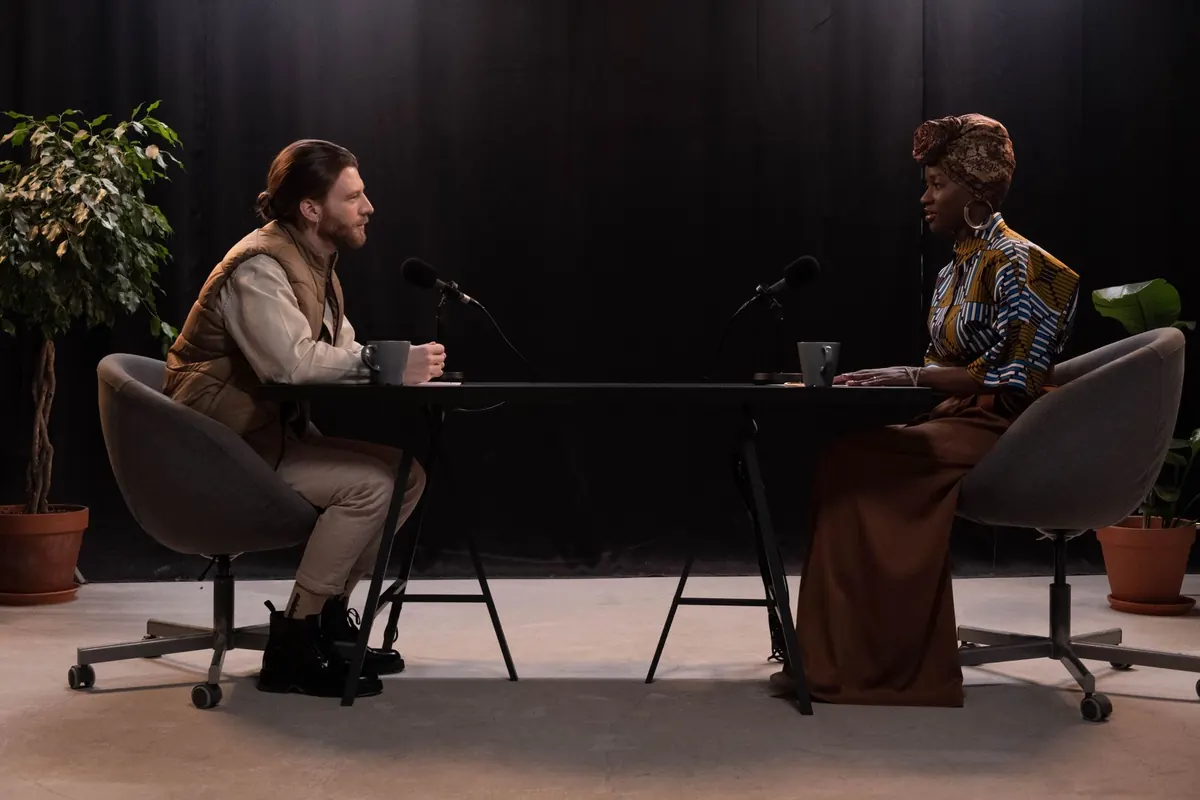
A theatre interview is not an audition and it is not a corporate hiring round. It sits somewhere between a conversation between future collaborators and a careful reading of whether two people can spend six weeks in a rehearsal room without driving each other up the wall. Most actors and directors prepare for it the way they prepared for exams: they rehearse answers. The people who do it well prepare questions instead. What follows is a working method you can use the next time someone asks to meet you for a chat about a show.
Read the play twice. Once for pleasure, quickly, without a pencil. Then again slowly, marking the two or three moments you cannot yet see staged. Those moments are your material. They are far more useful in a conversation than a plot summary, and they signal that you think in terms of performance rather than literature.
Then find out what you are walking into. Who else is attached? Is this a new writing commission or a revival? Is the interviewer the director, the producer, or the person who will actually be in the room with you at 9am on a Monday? Watch or read something they made recently, but resist the urge to demonstrate that you have done so. "I saw your Measure for Measure" is a fine opening. A three-minute analysis of it is not.
One rule worth keeping: know the awkward history of the project and do not be the one to raise it. If the show lost its lead three weeks before rehearsals, if the venue has had a difficult year, if the last production of this play divided critics, the interviewer knows all of it. Mentioning it in the first ten minutes makes you look like you are auditioning for the role of informed outsider.
Every CV has a soft spot. A gap, a show you left, a part you turned down, a review you would rather forget, a period of not working at all. Decide in advance how you will describe the hardest item in one calm sentence. One. Not a paragraph, not a justification with three subordinate clauses. "I left in the third week because the process wasn't working for me, and I'd do it again" is a complete answer. Explanation creep is what makes an interviewer lean forward; brevity makes them lean back.
Money and schedule belong in the same category. Ask about fee, per diems, travel, and contract timing plainly and without apology. A question asked directly reads as professionalism; a question asked apologetically reads as discomfort, and discomfort invites haggling. Know your own range before you walk in, and know what you would need in order to say yes.
You are also allowed to decline a question. Personal circumstances, health, family, and anything that edges toward discrimination are not part of a conversation about casting. A short, warm deflection works better than a confrontation: "That's not something I discuss in a first meeting, but I'm happy to talk about how I work in the room." If a question touches on contracts, rights, or a situation that feels legally delicate, take it away and get proper advice from your union or a lawyer before you reply in writing.
The best questions are the ones you actually want answered. Sort them into three groups and take two from each.
Notice that none of these invite a speech. Each one can be answered in a couple of sentences, which is what you want in a first meeting.
When you are the one doing the interviewing, the temptation is to fill the hour with your vision. Spend at least a third of it asking. Useful territory: what part of the process the actor finds hardest; what they need from a director in the first week; whether they prefer to arrive with the text learned or to discover it on the floor; how they like to receive notes; and what would make them turn a job down. That last question is unusually revealing, and almost nobody asks it.
If you are the one being interviewed, by a producer or a venue, ask about the budget line for design, who holds final say on casting, how press and marketing are handled, and what happened the last time a show in this slot did not land. Those answers tell you more about the job than any job description.
Most interviews are a list of questions answered in turn. The conversation people remember is the one where somebody asked a second question about the first answer. Three reliable moves:
Ask one thing at a time and then stop talking. Silence after a question is not a failure; it is usually where the honest answer arrives. Keep a notebook out and write the occasional phrase down. Not only does it help you afterwards, it tells the other person that you listen for specifics.
This is the whole preparation, and it fits in less time than an episode of anything.
Afterwards, send a short note within a day. Two sentences, one specific detail from the conversation, no pressure and no follow-up question disguised as enthusiasm. Then let it go and get on with the rest of your week. The interview was never the performance; it was the first rehearsal, and the point of a first rehearsal is to find out whether you want to come back.
Photo: cottonbro studio / Pexels
Previous Post
Summer Shakespeare in the Park: A Practical Guide to Picnic Theatre
Next Post
How to Build a Balanced Review: A Checklist for Student Critics